BASKETBALL POSITIONS
There are five different basketball positions. Each one is very important but they all do different things. You have your,
POINT GUARD
The point guard. Do you like leading teams? You should be a point guard. The point guards are normally the smallest on the team (but that doesn’t mean you have to be the smallest). The point guard runs the team by running the offense and different plays while controlling the ball on offense. As the point guard, it is your responsibility to be able to handle the ball and get your teammates the ball. Normally, they end up being pretty fast and well-conditioned because they need to be able to play for long periods of time. It is also important for them to be able to be strong with the ball and not turn it over a lot. Defense for the point guard is very important, you need to be able to be physical and “harass” the other person you are guarding. Examples of point guards in the NBA are Russell Westbrook, Steph Curry, Chris Paul, and of course many more.

SHOOTING GUARD
Shooting guard or the “2”. This position is very similar to a point guard, but at the same time very different. Let me explain. The shooting guards are normally similar in size and stature. They can do the same things as point guards do, but they are not as good at it. Normally they are better at scoring than point guards but don’t pass as well. Since they are a little bit bigger, they are normally better rebounders than point guards. Most of the time, they are known for their scoring and play-making ability. They’re on the court to score the basketball and be very aggressive. Examples: Klay Thompson, Jaylen Brown, James Harden, and more.

SMALL FORWARD
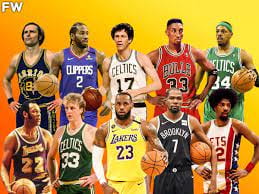
Small forward. The “3”. The most athletic, tall, versatile player on the court, normally. This player is just a taller version of the shooting guard but is normally more athletic and better on defense. They can guard about anyone on the court no matter the position and can rebound fairly well. They usually can score the basketball well from all three levels of the court. 3 point line, mid-range, and around the basket. Being extremely good on defense is what separates okay small forwards from being great. Since of their build, they can guard so many different players which makes them so valuable. Example: Kevin Durant, Lebron James, Jason Tatum, and more.
POWER FORWARD
Power forward. The “4”. Similar to the small forward, the power forward is normally a bigger less skilled version of the “3”. Power forwards have better low post game, and are usually not as good scoring from the wing. Their shot is worse, making them spend most of their time around the paint. Even though they can’t shoot as well, they are still able to make a good percentage of catch and shoot threes. Normally power forwards doesn’t score as much, but instead are very good at playing defense and rebounding. Having a good power forward can put you at a huge advantage over other teams because of how much they can do. Examples: Giannis Antetokounmpo, Tim Duncan, Anthony Davis

CENTER
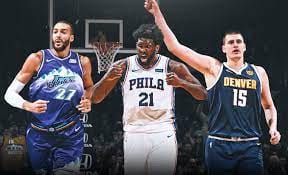
Center. The “5”. The biggest man on the team, normally. I would say either the most important position on the team, or by far the least. In the NBA nowadays, the amount of centers playing in crunch time during the end of games is very small. Even though they are very good at rebounding and can protect the rim well, they are normally slow and it is hard for them to guards and other faster players. On the other hand, if you have a great center like Jokic or Joel Embiid, you can build a team around them and become very good. Center is one of the middle positions that can be super important for your team’s success, or they can be not needed for your team. More examples: Rudy Gobert, Shaq, Wilt Chamberlin.